
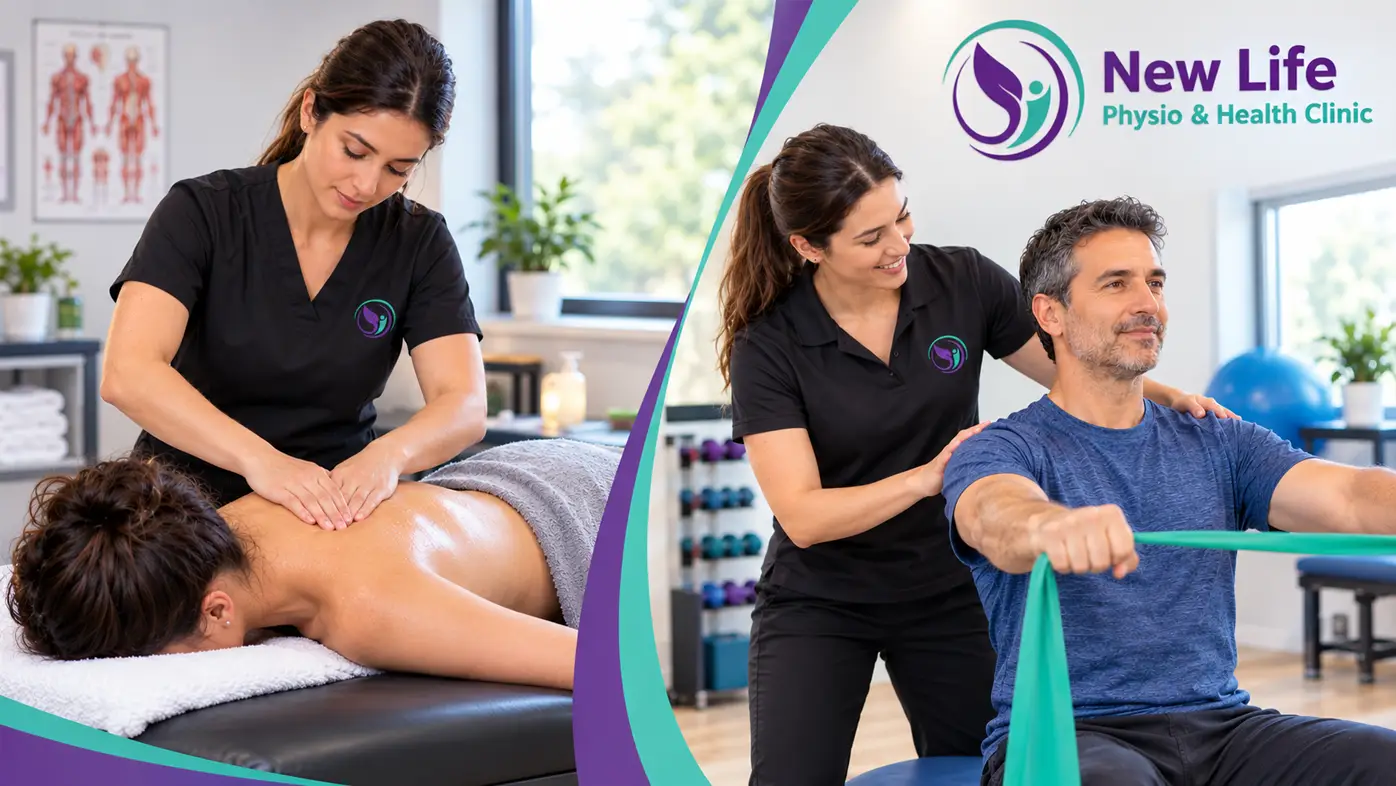
“I think I just need a massage.”
We hear this all the time.
And sometimes, you’re absolutely right.
Massage can be a great way to reduce muscle tension, ease soreness, help you relax, and feel better after a stressful week or a demanding workout.
But there are times when massage isn’t the whole answer.
The important question isn’t simply:
“Can massage make this feel better?”
It’s:
“Is massage the right treatment for what is actually causing the problem?”
When massage can be a great choice
Massage can be helpful for many situations, including:
- Muscle tension and tightness
- General soreness
- Stress-related muscle tension
- Post-exercise recovery
- Some headaches and neck/shoulder tension
- Chronic muscle discomfort
- Relaxation and overall well-being
Sometimes, you simply need to give your body a chance to relax.
And that’s a perfectly good reason to get a massage.
But what if the pain keeps coming back?
This is where things get interesting.
Imagine you have shoulder or neck pain. You get a massage, feel much better afterward, and think, “Perfect!”
Two or three days later, the pain is back.
So you book another massage.
Then it happens again.
And again.
Massage may be helping your symptoms—but it may not be addressing why the symptoms keep returning.
There could be other factors involved, such as:
- Muscle weakness
- Poor load tolerance
- Repetitive work
- Training errors
- Movement patterns
- Ergonomics
- Joint mobility
- Lack of recovery
- An underlying injury
In these situations, massage may still be useful—but combining it with assessment and active rehabilitation may be a better long-term strategy.
Feeling “tight” doesn’t always mean you need to be loosened
This is one of the biggest misconceptions.
A muscle can feel tight because it is overloaded, fatigued, weak, or working harder than it should.
For example, if certain muscles aren’t strong enough to handle the demands placed on them, other muscles may have to work overtime.
You may feel “tight.”
You massage it.
It feels better.
But the same tightness comes back because the underlying problem hasn’t changed.
Sometimes the answer isn’t:
“How do we loosen this muscle?”
It may be:
“How do we make this muscle—and the rest of the system—better able to handle the workload?”
That’s where strengthening and progressive exercise can make a difference.
When massage may not be the first step
There are also situations where getting an assessment before massage is a better idea.
For example, if you have a new injury with significant swelling, bruising, or severe pain, aggressive massage may not be appropriate.
Similarly, if you have new, unexplained, or unusual pain, repeatedly treating the painful area without understanding what’s causing it may not be the best approach.
Certain medical conditions, infections, skin problems, vascular conditions, or other health concerns may also require massage to be modified or avoided.
When in doubt, it’s better to ask.
Sometimes the painful area isn’t the real source of the problem
Another common example is shoulder pain.
The painful area may be your shoulder, but the neck or upper back may also be contributing to your symptoms.
You can massage the shoulder and feel better—but if another area is contributing to the problem, the symptoms may keep coming back.
This is one reason assessment matters.
Where you feel pain isn’t always the same as where the problem is coming from.
Massage doesn’t have to be “massage or physiotherapy”
Here’s the good news:
You don’t necessarily have to choose one or the other.
Massage and physiotherapy can work very well together.
Massage may help reduce discomfort and muscle tension, making it easier to move.
Physiotherapy may then address strength, mobility, balance, movement, load tolerance, or other factors contributing to the problem.
Depending on your situation, your treatment might include:
Hands-on treatment → movement → strengthening → progressive loading → return to normal activity
The exact combination depends on what you need.
A multidisciplinary approach at New Life
At New Life Physio and Health Clinic, we understand that pain and movement problems don’t always have a single solution.
Our clinic brings together different healthcare professionals and treatment approaches, including physiotherapy, chiropractic care, massage therapy, and acupuncture.
Depending on your condition and goals, your care may involve one service—or a combination of approaches.
For example, someone with persistent neck and shoulder pain may benefit from physiotherapy to address strength and movement, massage therapy to help with muscle tension and comfort, and other appropriate treatments depending on the assessment.
The goal isn’t to give everyone more treatment.
The goal is to give each person the right treatment for their individual needs.
Our professionals can work together when appropriate to provide a more coordinated approach to your recovery.
You don’t necessarily have to choose between “massage” and “physiotherapy” simply because they are different services.
Sometimes the best approach is to use the right tools at the right time.
So, should you get a massage?
If you’re feeling tense, sore, stressed, or simply want some hands-on treatment to help you feel better—massage may be exactly what you need.
But if your pain keeps returning, your function is getting worse, or you’re dealing with a new or unexplained problem, it may be worth looking beyond the symptoms and finding out what’s driving them.
At New Life Physio and Health Clinic
We offer massage therapy and physiotherapy, along with other rehabilitation services, because different people need different approaches.
Sometimes you need a massage.
Sometimes you need an exercise program.
Sometimes you need both.
And sometimes, the most important first step is simply figuring out what’s actually going on.
The goal isn’t just to make you feel better for a few hours. It’s to help you move, function, recover, and feel better for the long term.
Frequently Asked Questions
1. What can massage therapy help with?
Massage may help reduce muscle tension, soreness, stress, and some types of neck, shoulder, or other musculoskeletal discomfort. It can also be useful for relaxation and recovery after physical activity.
2. Is massage appropriate for every type of pain?
Not necessarily. Massage may not be the best first approach for every condition, particularly when there is a new injury, significant swelling, unexplained pain, or another condition that requires assessment. Sometimes understanding the cause of the problem is more important than simply treating the painful area.
3. Why does my pain keep coming back after a massage?
Massage may provide short-term relief without addressing all of the factors contributing to your symptoms. Recurring pain can sometimes be related to strength, movement, workload, ergonomics, training habits, recovery, or an underlying injury. In these situations, massage and physiotherapy may work well together.
4. Should I see a physiotherapist or a massage therapist?
It depends on your goals and symptoms. Massage may be a great choice when your main goal is reducing muscle tension, soreness, or stress. Physiotherapy may be more appropriate when you have an injury, movement limitation, weakness, recurring pain, or difficulty performing specific activities. Sometimes a combination of both is appropriate.
5. Can massage and physiotherapy be used together?
Yes. Massage and physiotherapy can complement each other. Massage may help with muscle tension and short-term comfort, while physiotherapy can address strength, mobility, movement, load tolerance, and functional recovery. The best approach depends on your individual needs.