
“I thought I was supposed to rest.”
That is one of the most common things we hear from people recovering from a concussion.
And it makes sense. After a concussion, you may have a headache, feel dizzy, tired, foggy, sensitive to light or noise, or simply feel like your brain needs a break.
So the natural reaction is to stop everything.
Stay in bed. Avoid exercise. Limit screens. Wait until you feel completely normal.
But concussion recovery is a little more complicated than that.
Rest is important—but too much rest may not be the answer
In the early stage after a concussion, taking it easy is important. But once the initial period has passed, staying completely inactive for days or weeks isn’t usually the goal.
For many people, gradually getting back to physical activity can actually be an important part of recovery.
The key word is gradually.
Going from “I haven’t exercised for two weeks” straight back to a hard workout is very different from taking a 10-minute walk or doing light cycling.
Think of concussion recovery as a dimmer switch—not an on/off switch.
“But exercise makes my symptoms worse!”
This is where things can get confusing.
You might go for a walk and notice that your headache increases. You might use a stationary bike and suddenly feel dizzy. You might try a workout and feel exhausted much sooner than usual.
Why does this happen?
After a concussion, some people have a harder time regulating the normal demands of exercise. Your heart rate, breathing, blood flow and energy demands all increase when you exercise. For some people, these changes can temporarily trigger symptoms such as headache, dizziness, fatigue or feeling “foggy.”
This is sometimes described as exercise intolerance.
It doesn’t necessarily mean that exercise is damaging your brain. It may simply mean that your current exercise tolerance is lower than it was before the concussion.
Think of it like a car that can normally drive 100 km before needing a break. After a concussion, the same car might currently only be comfortable driving 20 or 30 km.
The goal isn’t to park the car permanently. The goal is to gradually build its capacity again.
That’s why concussion rehabilitation often uses carefully dosed exercise. You start at a level your body can tolerate and gradually increase the duration or intensity.
The goal isn’t to push through a major symptom flare. The goal is to challenge your system enough to adapt without overwhelming it.
So, what kind of exercise can you do?
There isn’t one exercise that works for everyone after a concussion.
Depending on your symptoms and stage of recovery, rehabilitation may include:
- Walking
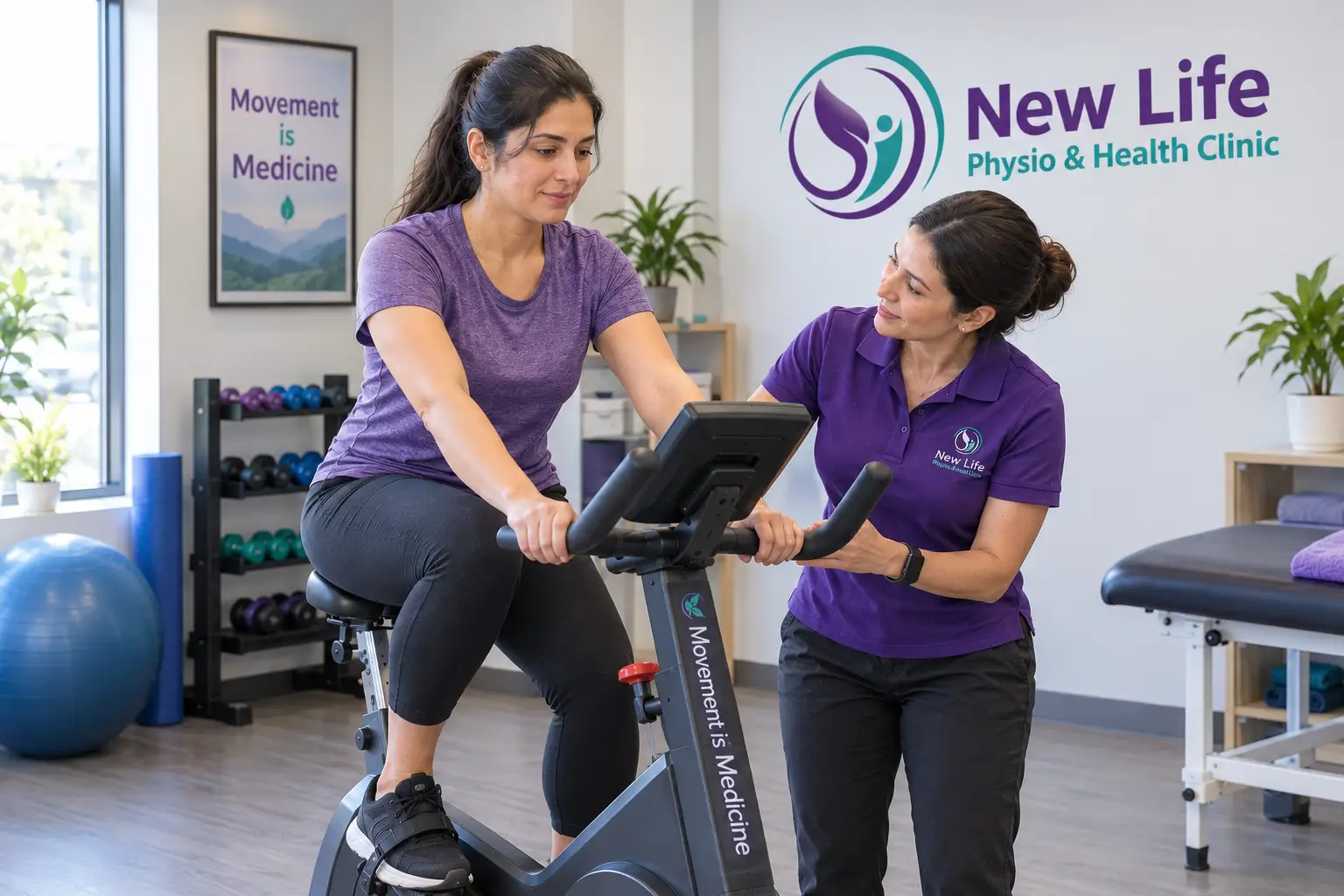
- Stationary cycling
- Light aerobic exercise
- Balance exercises
- Eye and head movement exercises
- Vestibular exercises
- Neck exercises
- Coordination exercises
- Gradual return to gym activities
- Sport-specific exercises
For example, someone whose main problem is exercise intolerance may need a very different program from someone whose main problem is dizziness when turning their head.
That’s why concussion rehabilitation should be individualized.
Your symptoms can give us clues
Concussion doesn’t look the same in everyone.
One person may mainly have headaches. Another may feel dizzy walking through a busy grocery store. Someone else may feel fine sitting on the couch but develop symptoms after 10 minutes of exercise.
These differences matter.
Dizziness with head movement may point toward the vestibular system. Neck-related headaches may require a closer look at the cervical spine. Exercise intolerance may require a gradual aerobic conditioning program.
In other words, “concussion” is the diagnosis—but your symptoms help determine the rehabilitation plan.
What about going back to the gym?
You don’t necessarily have to stay away from the gym until every symptom has completely disappeared.
But you probably shouldn’t jump straight back into your previous workout either.
A better approach is to gradually increase:
Duration → intensity → complexity → sport or work demands
You might start with light aerobic activity and later add strength training, faster movements, balance challenges, or sport-specific activities.
If symptoms increase significantly, that’s useful information—not a failure. It may simply mean that your current workload needs to be adjusted.
What if my symptoms aren’t going away?
Most people improve, but some continue to experience symptoms for weeks or longer.
If you’re still dealing with:
- Persistent dizziness
- Headaches
- Balance problems
- Exercise intolerance
- Brain fog
- Motion sensitivity
- Light or noise sensitivity
- Difficulty returning to work, school, or sports
it may be time for a more detailed assessment.
Sometimes there are specific factors contributing to your symptoms, such as the vestibular system, vision, neck, balance, or your ability to tolerate physical exertion.
Identifying these factors can make rehabilitation more targeted.
The goal is getting back to your life
One of the biggest goals of concussion rehabilitation is helping you return to the activities that matter to you.
That might mean going back to work, returning to school, going to the gym, playing with your kids, driving, returning to your sport—or simply being able to go grocery shopping without feeling dizzy or overwhelmed.
Recovery isn’t about staying in a perfectly quiet room until every symptom disappears.
It’s about gradually rebuilding your tolerance for the activities that matter to you.
The bottom line
After a concussion, rest can be helpful—especially early on. But recovery usually isn’t about doing nothing.
It’s about finding the right amount of activity for where you are today, then gradually doing more as your tolerance improves.
If exercise makes your symptoms worse, that doesn’t automatically mean exercise is harmful. It may simply be a sign that the intensity, duration, or type of activity needs to be adjusted.
You don’t have to guess your way through it.
At New Life Physio and Health Clinic, our physiotherapists assess and treat post-concussion symptoms and can help you safely progress toward your normal activities.
If you’re experiencing persistent dizziness, headaches, balance problems, exercise intolerance, or difficulty returning to work, school, exercise, or sports, feel free to book an assessment with one of our physiotherapists.
Concussion recovery isn’t about doing everything or doing nothing. It’s about doing the right things, at the right dose, at the right time.
Frequently Asked Questions
1. Should I completely rest after a concussion?
Not usually for an extended period. A short period of relative rest can be helpful early on, but prolonged complete rest is generally not the goal. Most people benefit from a gradual return to normal daily activities and appropriately prescribed exercise.
2. Can exercise make my concussion symptoms worse?
It can temporarily increase symptoms such as headache, dizziness, fatigue, or brain fog. This doesn’t necessarily mean that exercise is causing harm. Your physiotherapist can help determine an appropriate level of activity and gradually increase your tolerance.
3. When can I return to the gym after a concussion?
The timing varies from person to person. You may be able to begin with light activities such as walking or stationary cycling and gradually progress to more demanding exercise. Your symptoms, exercise tolerance, and specific goals should guide the progression.
4. What if my concussion symptoms have lasted for several weeks?
Persistent symptoms such as dizziness, headaches, balance problems, motion sensitivity, fatigue, or difficulty exercising may benefit from a physiotherapy assessment. Your rehabilitation plan can be tailored to the symptoms that are limiting your recovery.
5. Can physiotherapy help with concussion recovery?
Yes. Physiotherapy can address problems such as dizziness, balance difficulties, neck pain, exercise intolerance, visual or vestibular symptoms, and difficulties returning to work, school, exercise, or sport. Your physiotherapist can assess your symptoms and develop a progressive rehabilitation plan.