
High blood pressure (hypertension) is one of the leading risk factors for heart disease and stroke. While medication plays a big role in management, research is increasingly showing that specific types of exercise can be just as powerful in lowering blood pressure. And the best part? You don’t need a gym membership or fancy equipment, something as simple as a wall squat can help.
What the Research Says
Some reviews have analyzed dozens of clinical trials on isometric exercise training, exercises where you contract muscles without moving, like pushing against an immovable object or holding a position. The results are impressive:
- Isometric exercise lowered systolic blood pressure by about 8 mmHg and diastolic blood pressure by about 4 mmHg on average.
- That’s similar to what many first-line blood pressure medications achieve.
- Among different types of isometric training, isometric wall squats ranked as one of the most effective options, even outperforming some aerobic exercises like walking.
Why Wall Squats Work
When you perform a wall squat, your leg muscles contract and hold steady against gravity. This static contraction seems to improve blood vessel function and reduce resistance in your arteries over time, helping lower blood pressure.
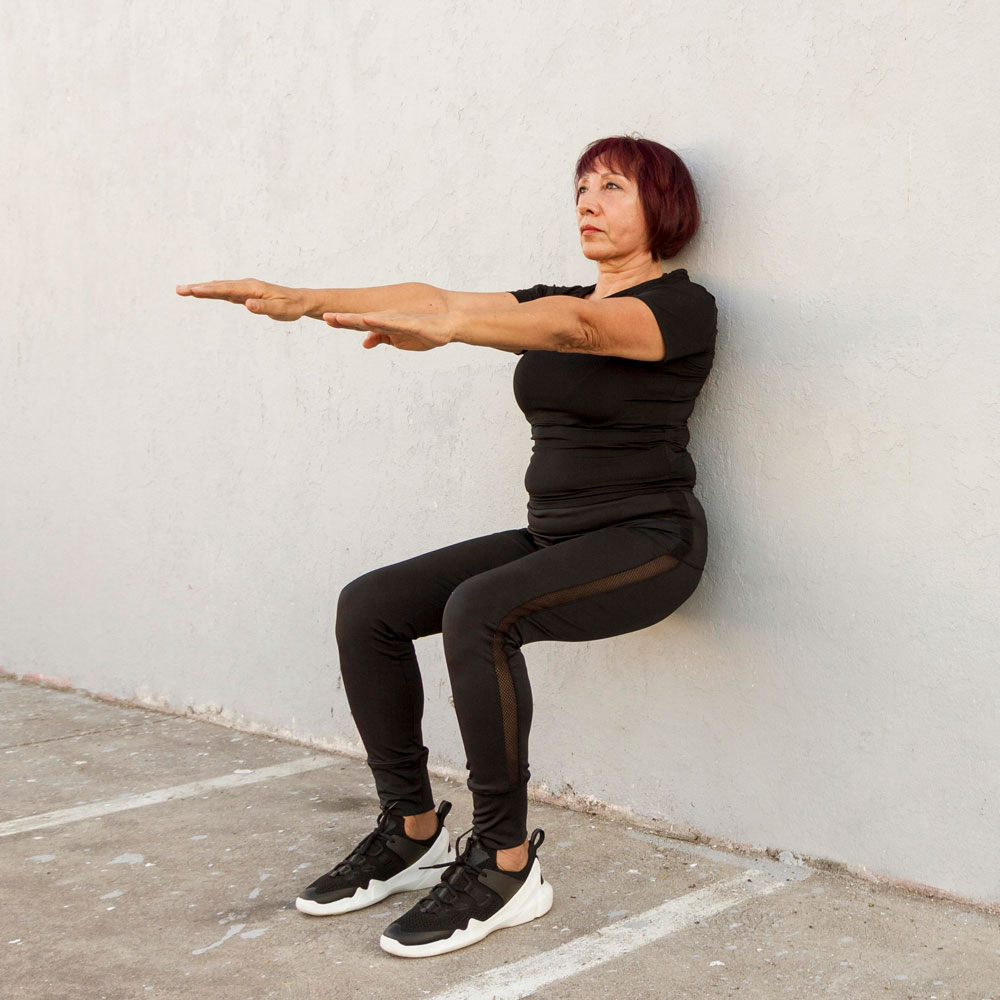
How to Do a Wall Squat
- Stand with your back flat against a wall.
- Slide down until your knees are bent at about 90 degrees (like you’re sitting on an invisible chair).
- Hold this position for up to 2 minutes if you can.
- Tip: If 2 minutes feels too long, start with 20–30 seconds and gradually build up.
- Rest for a couple of minutes, then repeat 3–4 times.
- Aim for 3–4 sessions per week.
Modifications for Sensitive Knees
- If you have knee issues such as osteoarthritis or meniscus injuries, you don’t have to go all the way down.
- Try a mini- or semi-squat position with a gentler bend.
- This still engages your muscles and helps lower blood pressure while protecting your joints.
- Over time, as your strength and comfort improve, you may be able to increase the depth.
- Tip: If you have high blood pressure, joint issues, or other health concerns, check with your healthcare provider before starting new exercises like wall squats to ensure they’re safe for you.
The Takeaway
Simple doesn’t mean ineffective. The latest research confirms that adding wall squats to your weekly routine can significantly reduce blood pressure, and it only takes a few minutes. Wall squats are easy, effective, and can be done at home, making them a great addition to a heart-healthy lifestyle.
References:
- Edwards, Jamie J., et al. “Isometric exercise training and arterial hypertension: an updated review.” Sports Medicine 54.6 (2024): 1459-1497.
- Edwards, Jamie J., et al. “Exercise training and resting blood pressure: a large-scale pairwise and network meta-analysis of randomised controlled trials.” British journal of sports medicine 57.20 (2023): 1317-1326.